Windows 11
FullMethod listed in current datasetDigital License
- Type: Permanent activation
- Updates: All feature updates supported for each version of Windows 10
- Installation: Supports clean installs
- No reactivation needed after major updates
Review KMSpico download source information, then check compatibility by Windows, Office or Server version. The page keeps source provenance, compatibility status, licensing context and security findings separate.
 14 compatibility entries
4 Windows · 6 Office · 4 Server
14 compatibility entries
4 Windows · 6 Office · 4 Server
This section covers the download/source intent without treating every file distributed under the KMSpico name as identical or automatically trustworthy.
Record where the file came from, the claimed version, acquisition date, file name, size and a complete SHA-256 hash. Different repackaged files can use the same KMSpico name.
After identifying the artifact, use the compatibility checker below for the Windows, Office or Server version you are researching. Compatibility and file safety are separate questions.
Select a product family and version to pull the matching status from the current compatibility dataset.
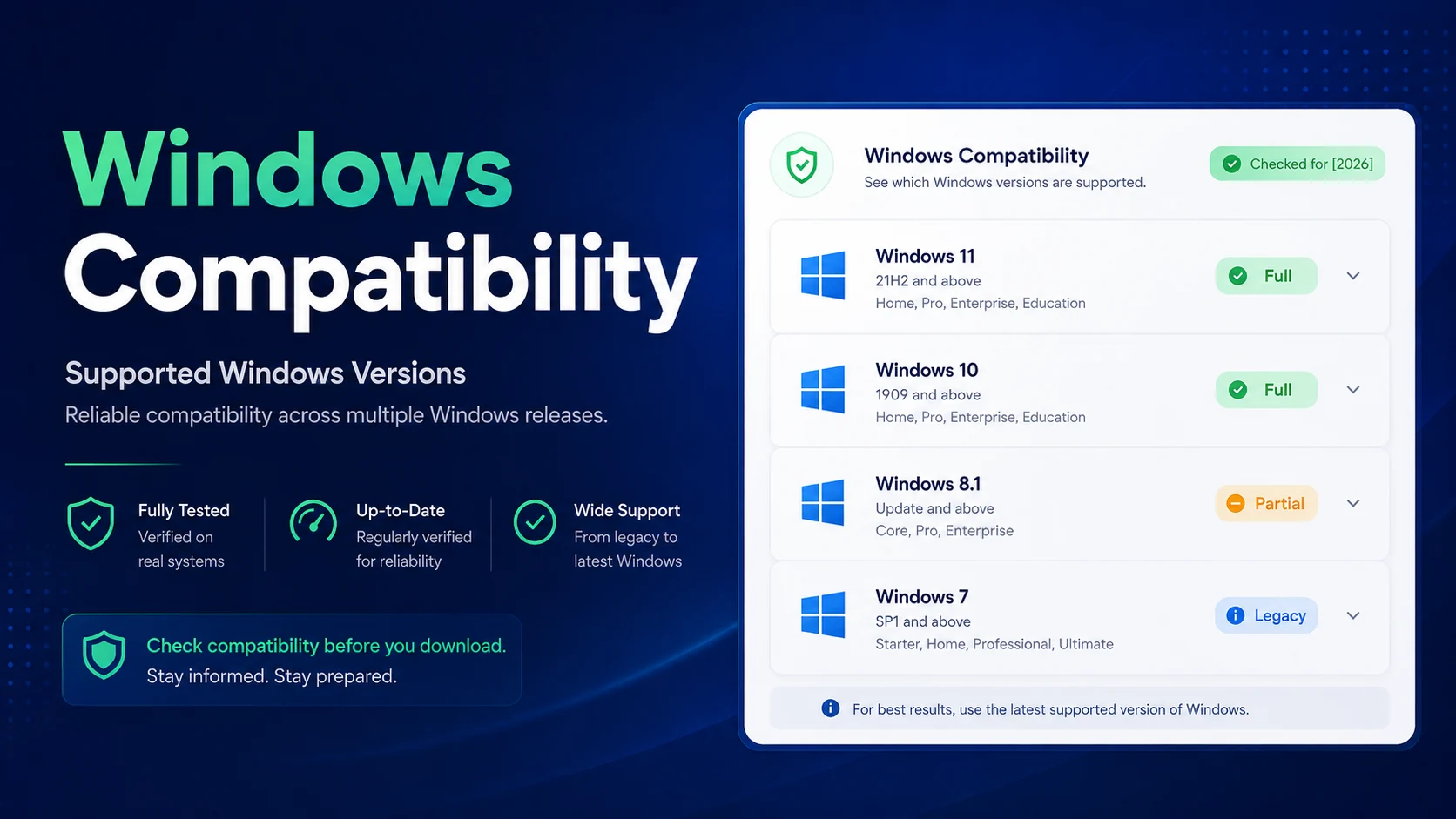
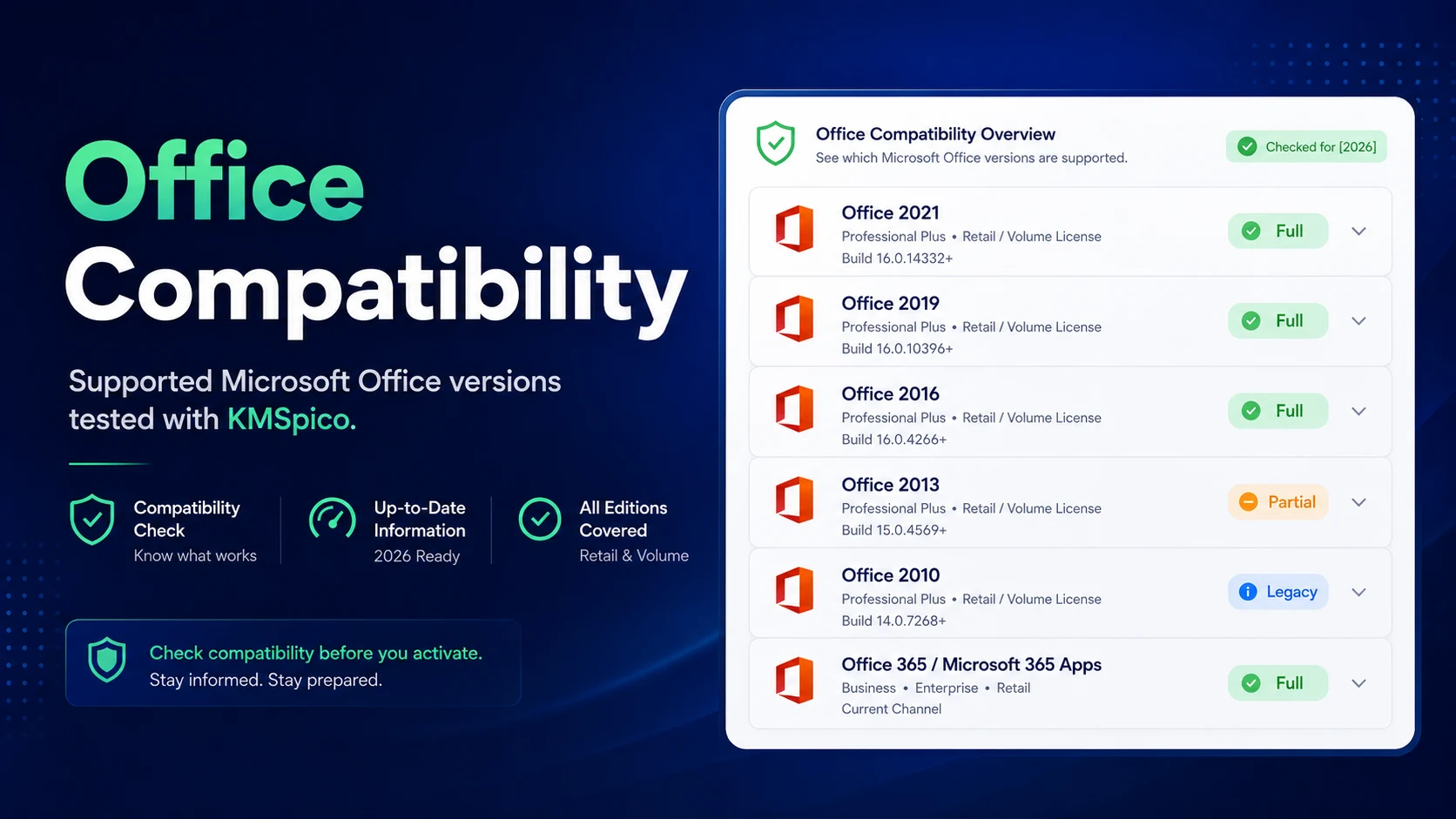
The useful part of the page is the product-level compatibility data above. The sections below explain what the labels mean, where KMS fits into Microsoft licensing, and which claims should be treated cautiously.
Windows, Office and Server products do not share one licensing model. The exact edition and channel matter more than a generic “works with Windows” claim.
A compatibility status says nothing about whether a downloaded executable is trustworthy. File provenance and licensing are separate questions.
KMS is Microsoft’s volume-activation technology for eligible organizational editions. KMSpico is an unofficial tool associated with emulating or reproducing parts of that activation behavior outside a normal organization-managed KMS deployment.
| Area | Official Microsoft KMS | KMSpico context |
|---|---|---|
| Purpose | Volume activation inside eligible organizations | Unofficial activation-tool behavior |
| Licensing | Used with valid volume licensing | Does not itself provide a Microsoft license |
| Administration | Managed by an organization | Typically run locally by an end user |
| Trust model | Microsoft-supported deployment | Trust depends heavily on file provenance and distribution source |
The original page used Full, Partial and Legacy labels. They are preserved here, but the wording is treated as dataset status rather than proof that every build and licensing channel behaves identically.
The current dataset marks the product as broadly covered. Verify the exact edition and channel before drawing conclusions from the label.
The current dataset records limitations, older builds, extra conditions or reduced coverage. These entries deserve more careful version-by-version checking.
A compatibility page should not describe an unknown executable as “100% clean” simply because a product name is familiar. Different files can be distributed under the same KMSpico name.
Record the exact filename, file size, cryptographic hash, acquisition date and source. A real SHA-256 value is useful; placeholder hashes are not.
If Microsoft Defender or another security product flags a file during a controlled test, record that result. Do not turn the warning into instructions to disable protection.
Short answers to the questions that sit next to the compatibility intent.
No single compatibility label should be read that broadly. Windows edition and licensing channel matter, and the current dataset itself contains different Full, Partial and Legacy statuses.
The same name can be attached to different builds or repackaged files. That is why file provenance, a complete hash and the acquisition source matter.
No. Compatibility, licensing and security are separate questions. A tool can appear to work and still introduce security or stability risk.
Official KMS is Microsoft’s volume-activation system for eligible organizational licensing. KMSpico is not Microsoft’s KMS service and should not be represented as an official Microsoft licensing method.
The supplied dataset associates some older releases with narrower coverage or additional limitations. Those entries should be checked against their exact build and licensing channel.
For production or business systems, use licensing methods supplied or authorized by Microsoft.
Students and institutions may have access to Microsoft education licensing through their school or organization.
The appropriate option depends on whether the device is personal, preinstalled by an OEM, or managed under an organization’s licensing agreement.